

The Icelandic Yule Cat, the Santa Clauses, and Their Fearsome Mother Grýla
When most people think of Santa Claus, they imagine a single, jolly man in a red suit. In Iceland, however, Christmas folklore takes a far darker—and far more fascinating—turn. Instead of one Santa, Iceland has 13 mischievous Santa Clauses, known as the Yule Lads, and looming over them all is their terrifying mother, Grýla, a giantess from the mountains who has frightened Icelandic children for centuries.
The Icelandic Yule Lads (Jólasveinar) are a group of brothers who visit children during the 13 nights leading up to Christmas, starting on December 12th. Each Yule Lad arrives one by one, and children place a shoe on their windowsill. Well-behaved children receive small gifts or treats, while misbehaving ones might wake up to find a potato instead. This tradition is still very much alive in modern Iceland, blending folklore with contemporary holiday cheer.

Photo: northiceland.is
Each Yule Lad has a unique name and personality, often linked to playful or troublesome behavior. Names like Spoon-Licker, Door-Slammer, and Sausage-Swiper give a clear sense of their habits. Historically, these figures were far from cute; they were used to scare children into good behavior. Over time, however, their image softened, and today they are portrayed as cheeky, humorous characters dressed in woolen clothes rather than the frightening trolls of old.
The true source of fear in Icelandic Christmas folklore is not the Yule Lads themselves but their mother, Grýla. Grýla is a gigantic troll or ogress who lives in the Icelandic mountains and emerges during the Christmas season to search for misbehaving children. According to legend, she carries them away in a sack and cooks them into a stew. References to Grýla date back to at least the 13th century, making her one of the oldest Christmas-related figures in Icelandic culture.
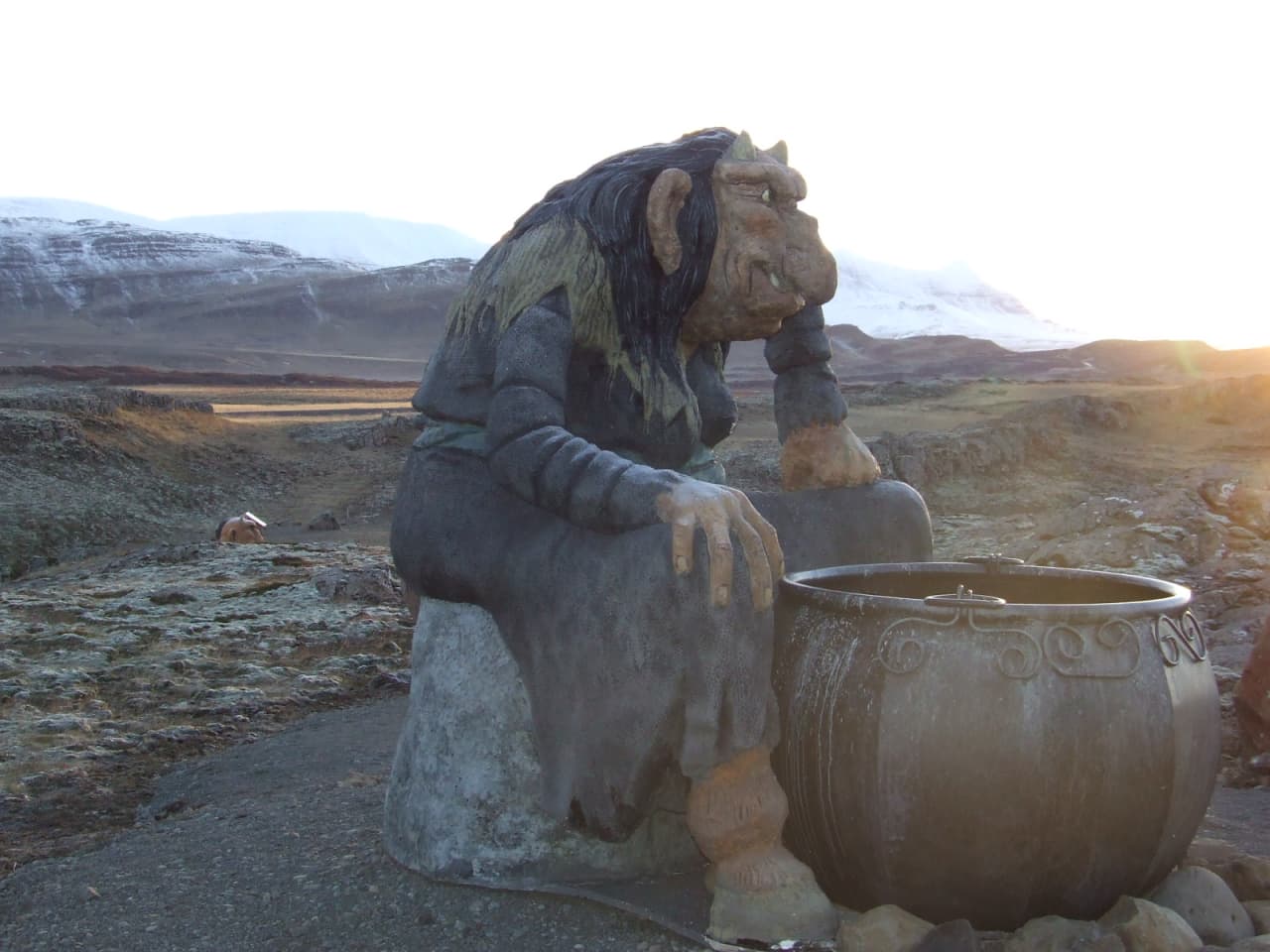
Photo: west.is
Grýla represents harsh realities of life in medieval Iceland, where survival during winter was difficult and obedience was seen as essential. Folklore like hers served as a warning to children during long, dark winters when food was scarce and dangers were real. Because of how frightening the stories became, Icelandic authorities eventually discouraged parents from using Grýla as a disciplinary threat, fearing it caused unnecessary terror.
Completing this unusual family is the Yule Cat (Jólakötturinn), Grýla’s enormous and murderous pet. The Yule Cat prowls the countryside at Christmas, devouring anyone—especially children—who has not received new clothes for the holidays. This legend encouraged hard work and productivity, ensuring everyone contributed before winter celebrations began. Even today, giving clothes as a Christmas gift remains a strong tradition in Iceland, often accompanied by playful references to the cat.
Together, Grýla, the Yule Lads, and the Yule Cat form a rich tapestry of folklore that reflects Iceland’s history, environment, and values. While the darker elements have been softened over time, these characters remain central to Icelandic Christmas celebrations. They remind us that beneath the festive lights and holiday cheer lies a storytelling tradition shaped by long winters, resilience, and a uniquely Icelandic sense of humor.
This content was prepared with the assistance of AI.


